
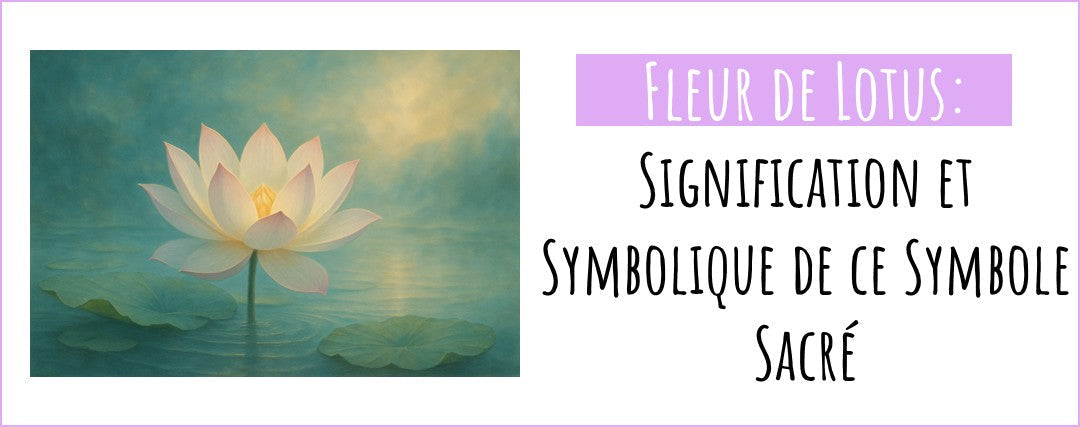
Lotus Flower: Meaning and Symbolism of this Sacred Symbol
For centuries, the lotus flower has captivated humanity with its mysterious beauty and profound significance. From East to West, it embodies awakening, purity, rebirth, and the connection between the physical and spiritual worlds. Its image appears on temples, works of art, tattoos, and jewelry, always carrying a powerful symbolic message. Whether you are drawn to its aesthetic or its philosophical reach, understanding what the lotus flower represents can enrich your view of the world — and of yourself.
In this article, we will explore in depth the meaning of the lotus flower, its origins, its use in ancient and modern cultures, its spiritual and emotional power, as well as its immense popularity in tattoos, jewelry, and decoration. You will discover why this sacred symbol traverses ages, continents, and sensibilities without ever losing its evocative power. And if you feel a personal connection with the lotus flower, you may leave with new inspiration to integrate it into your life.
What is the lotus flower?
A plant like no other
The lotus flower, often confused with the water lily, is a sacred aquatic plant belonging to the Nelumbo genus, whose most well-known species is the Nelumbo nucifera, also called the sacred lotus. Native to Asia, it grows in stagnant water, lakes, and shallow rivers, and is distinguished by its large circular leaves and magnificent flowers that emerge above the water.

The lotus has this fascinating ability to bloom in the murkiest mud while keeping its petals perfectly clean. This unique physical quality symbolizes the elevation of the soul above the obstacles of the material world. It is this purity amidst its environment that has made it a powerful spiritual symbol in many traditions.
Unlike the water lily, which floats on the water, the lotus flower grows above the surface, further accentuating its symbolism of elevation and transcendence. Its leaves are also hydrophobic, meaning they repel water and impurities, reinforcing the image of purity and spiritual detachment.
The leaves, seeds, roots, and even the lotus fruit are used in several dietary and medicinal practices, particularly in China, India, and Japan. The lotus is a versatile plant, deeply integrated into the culture of these civilizations, far beyond its aesthetic aspect alone.
The sacred lotus is also a fundamental element in Ayurvedic medicine and traditional Chinese medicine. Its seeds, rich in antioxidants, are renowned for their benefits for sleep, digestion, and vitality. The lotus leaves, meanwhile, are used in infusions to regulate blood pressure or promote weight loss. Even lotus roots, consumed in crispy slices, are an integral part of traditional Asian dishes.
In short, the lotus plant is not just a visual or spiritual symbol: it is also a true botanical treasure with multiple uses, at once practical, therapeutic, and sacred.
The deep meaning of the lotus flower
A symbol of purity, rebirth, and elevation
The meaning of the lotus flower is not limited to its beauty. This symbol, present in many spiritual and religious cultures, embodies concepts as fundamental as purification, rebirth, and the elevation of the soul. The fact that this plant emerges from muddy waters to offer an immaculate flower is perceived as a universal metaphor: that of the human being capable of rising above trials, suffering, or ignorance to achieve awakening.
In Buddhism, the lotus flower is one of the most powerful symbols. It represents spiritual progression, with each stage of its growth corresponding to a state of consciousness. A closed flower symbolizes an individual on the path to awakening, while a blooming lotus represents enlightenment. The Buddha is often depicted sitting or standing on a lotus flower, illustrating the transcendence of material desires and absolute wisdom.

In Hinduism, the lotus is also sacred. It is associated with deities like Vishnu, Brahma, or Lakshmi, the goddess of beauty and prosperity, who is often depicted standing on an open lotus flower. Here too, the flower symbolizes purity, divine creation, and fertility. It is seen as a celestial throne, a contact point between the divine and the earthly world.
In ancient Egypt, the blue lotus was a solar symbol linked to creation and daily renewal. It opened in the morning and closed at night, embodying the cycle of life, death, and rebirth. This cycle was so powerful that it was integrated into many Egyptian funerary and mythological representations.
Beyond religions, the symbolism of the lotus flower extends to philosophy, art, and even contemporary psychology. It evokes resilience, the return to oneself, and the balance between emotions and lucidity. In personal development, it is frequently used as a visualization or meditation tool to promote mental clarity and inner peace.
This ability to speak to everyone, regardless of their beliefs, makes the lotus flower a universal archetype. It reunites opposites: grounding and elevation, shadow and light, matter and spirit. That is why its symbolism traverses time, borders, and spiritual currents with such strength.

The lotus flower in different cultures
A universal symbol
The lotus flower is one of the rare symbols to have crossed geographical, linguistic, and religious borders with such consistency. Its symbolism, while adapted to each culture, retains a common core: purity, rebirth, elevation, and connection to the divine.
In Asia, and more particularly in Indian, Chinese, Thai, and Japanese cultures, the lotus is omnipresent. It is painted on the walls of temples, carved in stone, represented in mandalas, and even sung about in sacred texts. It is often associated with inner peace, perfect beauty, and self-mastery. In China, the lotus is also a symbol of marital fidelity and longevity. It is one of the eight auspicious symbols of Tibetan Buddhism.
In Japanese Zen Buddhism, the lotus flower is often linked to the notion of “kensho,” sudden enlightenment, and the idea of beauty born from imperfection. It reminds us that it is through the acceptance of our own nature, even if imperfect, that wisdom is born.
In Southeast Asian cultures, such as in Cambodia or Laos, the lotus is used in religious and social ceremonies. It is present in offerings, funeral wreaths, wedding decorations, and traditional dances. It embodies prosperity, blessings, and spiritual beauty.
In ancient Egypt, as mentioned previously, the blue lotus (often confused with the water lily) was a fundamental symbol of the solar cycle. It appeared on frescoes, sarcophagi, and amulets. The lotus embodied resurrection, cosmic renewal, and the creation of the world from primordial chaos. It was also associated with Osiris, the god of death and rebirth.
In ancient Greek culture, the lotus had a more literary and symbolic dimension, notably in Homer's Odyssey, where the “lotus eaters” forget their past and lose all desire to return. Here, the flower symbolizes extreme detachment, peace, but also the danger of forgetting oneself.
Finally, in contemporary Western culture, the lotus has found a new resonance through “new age” spiritual movements, yoga, mindfulness, and esotericism. It symbolizes spiritual awakening and inner harmony. We find it in tattoos, jewelry, logos, illustrations, but also as a decorative element in Zen interiors.

Whatever the cultural context, the symbolism of the lotus flower remains consistent: it speaks of transformation, inner beauty, resilience, and unity between body and spirit. This universality makes it a timeless and profoundly human symbol.
Lotus flower and modern spirituality
How is this symbol used today?
At a time when more and more people are seeking to reconnect with themselves, find meaning, or calm their minds, the lotus flower is experiencing a true renaissance in contemporary spiritual practices. It has become a visual landmark, a silent mantra, and an anchor point for those in search of inner peace and transcendence.
In practices such as yoga or meditation, the lotus is omnipresent. It is both a physical posture (Padmasana – the lotus position) and a symbol of elevation. Sitting in this position is symbolically equivalent to placing oneself within an open flower, ready to receive the light of consciousness. Many yoga mats, incense, candles, notebooks, or meditation cushions feature this motif to reinforce the symbolic grounding of the practice.
In personal development, the lotus often embodies the concept of resilience. It reminds us that even in the heart of difficult times — the “murky waters” of life — it is possible to grow, flourish, and be reborn with more wisdom and clarity. This is why the lotus is so often cited in coaching speeches, inspirational books, and positive affirmations.
On social media, the lotus flower is frequently used as an emoji, as an aesthetic filter, or in inspirational quotes. It has become a symbol for the generation that seeks to rise above the chaos of the world while remaining connected to a form of personal spirituality, free from any imposed religion.
The lotus is also present in everyday objects: lotus flower jewelry, temporary tattoos, wall illustrations, gratitude journals, bath mats, meditation cushions, etc. It embodies a gentle, aligned, and serene art of living. Adopting this symbol in your daily environment is a way to remind yourself that you can remain centered and luminous, even in the midst of turmoil.

Ultimately, the spiritual meaning of the lotus flower continues to expand. It touches people of all backgrounds, beliefs, or ages because it speaks of transformation, inner light, and alignment. It is the reflection of a quest for authenticity in a turbulent world.
The lotus flower tattoo: a deeply personal meaning
Symbolism, placement, and styles
Among all forms of bodily expression, the lotus flower tattoo is undoubtedly one of the most popular and meaningful. Whether for aesthetic or spiritual reasons, this motif attracts many people in search of a strong symbol. It is particularly appreciated for its richness of symbolism, its natural beauty, and its ability to convey a message that is both intimate and universal.
The lotus flower tattoo is often chosen by those who have gone through a difficult ordeal and emerged stronger. The lotus flower, which grows in the mud to bloom on the water's surface, then becomes a reminder of their own journey of resilience, healing, or transformation. This is why this motif is often chosen after a bereavement, a breakup, an illness, or a radical life change.
The meaning of the lotus flower tattoo can vary according to styles and individuals. For some, it represents wisdom or spiritual awakening. For others, it is synonymous with femininity, serenity, or inner strength. It can also be associated with natural beauty, fertility, or the balance between shadow and light.
Lotus flower tattoos can be done in very varied styles: minimalist black and white, colorful watercolor, geometric or mandala versions, ornamental, or realistic style. Each interpretation adds a particular dimension to the symbolism of the lotus.
As for placement, the most popular are: the nape of the neck, the spine, the wrist, the forearm, the ankle, or under the chest for a discreet and intimate look. The lotus tattoo can also be integrated into a larger composition (mandala, elephant, chakra, etc.).

Examples and ideas for lotus flower tattoos
Here are some inspirations for a unique and meaningful lotus flower tattoo:
- A blooming lotus with a watercolor gradient in shades of purple and blue, symbolizing awakening.
- A fine-line lotus flower design, placed on the nape of the neck, paired with a Sanskrit quote.
- A mandala lotus centered on the back, representing inner harmony and spirituality.
- A small, minimalist lotus tattoo on the inside of the wrist, to serve as a reminder of personal renewal.
- A stylized lotus with geometric elements, blending tradition and modernity.
The most important thing in choosing a lotus flower tattoo is that it resonates with your own story. It can be accompanied by elements that personalize it: a name, a date, a symbol, a specific color... The lotus adapts to all skin types, all styles, and all messages.
On platforms like Pinterest or Instagram, there are thousands of ideas for lotus flower tattoos, proving the global craze for this symbol. It is a flower that is anything but ordinary: each variation tells something unique, at the intersection of body and soul.
Lotus flower jewelry: much more than an accessory
Why wear lotus flower jewelry?
Wearing lotus flower jewelry is not just about sporting a beautiful accessory: it is about affirming a message, a philosophy, a state of mind. The lotus, a universal symbol of purity, resilience, and inner light, becomes a true talisman when worn close to the heart or wrist.
Lotus flower jewelry is highly prized by people in search of spirituality, meaning, or simply an inspiring symbol for everyday life. It can accompany a process of personal transformation, serve as an anchor during meditation sessions, or be given as a wish for protection and rebirth.
Depending on the material, shape, and delicacy of the design, each piece of jewelry expresses a different facet of the lotus: silver for timeless elegance, gold for light and warmth, natural stone for vibratory energy. Choosing the jewelry then becomes a subtle extension of one's inner path.
Discover our lotus flower jewelry collection
On our shop, we have carefully selected a collection of lotus flower jewelry to combine powerful symbolism with refined aesthetics. Whether you are looking for a subtle necklace, a lucky bracelet, or an elegant pair of earrings, each piece is designed to accompany you in your daily life.
Giving or treating yourself to a lotus flower piece of jewelry is more than just giving an object: it is conveying an energy, a meaningful gesture. Feel free to discover the entire range on our site to find the piece that resonates with your personal intention.

Lotus flower: between art and expression
Lotus Flower drawings, mandalas, and decorations
The lotus flower is an inexhaustible source of artistic inspiration. Thanks to its natural symmetry and rich symbolism, it is depicted in countless graphic works, from the simplest to the most elaborate. Whether as a pencil lotus flower drawing, a complex mandala, or a minimalist illustration, this motif appeals to both artists and lovers of zen decor.
Lotus flower drawings are highly prized for their soothing and meditative appearance. In adult coloring books, temporary tattoos, gratitude journals, or wall posters, the lotus flower fits in with almost natural ease. It inspires calm, centering, and harmony.
Lotus-shaped mandalas are also very popular. These sacred circles, composed of floral and geometric patterns, often serve as a meditation aid. The lotus flower drawing then becomes a tool for focus, elevation, and personal centering. Each pencil stroke becomes an intention, each shape a symbol.

In the world of interior design, lotus flower drawings are used to create soothing atmospheres. You can find them on tapestries, cushions, wall frames, handcrafted objects, or scented candles. Their mere presence is enough to transform a room into a haven of peace.
It is also common to find lotus flower drawings in art therapy journals, personalized tattoos, or even DIY (Do It Yourself) projects. The graphic beauty of this flower, combined with its symbolic weight, makes it a motif that is both decorative and spiritual.
Whether you are an artist, a meditation enthusiast, or simply looking for a poetic touch for your home, lotus drawings are a simple and powerful way to invite calm and beauty into your life.
The lotus flower in nature and its benefits
Lotus seed, lotus leaf, lotus fruit
Beyond its spiritual and artistic symbolism, the lotus flower also possesses many natural virtues, often little-known. Used for centuries in traditional medicine and food, it reveals an unsuspected richness in all its parts: flowers, seeds, roots, leaves, and even the lotus fruit.
The lotus seed, also known as the Nelumbo nucifera seed, is used in Asia for its many benefits. Rich in antioxidants, it is renowned for its calming effects, particularly on the nervous system. In China, it is consumed boiled or dried, and it is part of many wellness recipes. The benefits of lotus seeds also include a positive effect on sleep, digestion, and blood circulation.
The lotus fruit, recognizable by its hole-riddled apple shape, is used in both gastronomy and cosmetics. Its sweet taste and crunchy texture make it a popular ingredient in Asian cuisine. It is rich in fiber and minerals, and its consumption is reputed to help detoxify the body.

Lotus leaves, meanwhile, are used in herbal medicine. Dried and then infused, they are said to have a positive effect on blood pressure, cholesterol, and water retention. They are also sometimes used in detox diets or Ayurvedic cures. The benefits of lotus leaves are still little known in Europe, but their popularity is growing with the rise of natural medicine.
In short, the sacred lotus is not only a spiritual symbol or an aesthetic motif. It is also a complete plant with numerous therapeutic properties. It is a link between body and mind, nature and culture, beauty and health.
Conclusion: An eternally inspiring symbol
The lotus flower is much more than just an aquatic plant. It is a mirror of the human soul, a universal symbol that transcends cultures, ages, and sensibilities. Whether one is drawn to it for its spiritual meaning, its graphic beauty, or its natural benefits, the lotus remains an inexhaustible source of inspiration and transformation.
Whether it is a lotus flower tattoo marking a life milestone, a lotus piece of jewelry worn as a talisman, a meditative lotus flower drawing, or a beneficial infusion made from leaves or seeds, this symbol invites itself into our daily lives with gentleness and depth.
Adopting the lotus flower in your life means giving yourself a constant reminder of our ability to rise, to remain pure in the midst of complexity, and to find balance between matter and spirit. It teaches us that even in the mud, light can emerge.
May you find in the lotus a source of inspiration, comfort, or beauty, and why not integrate it into your life in the form that speaks to you the most.
Discover now our collection of lotus flower jewelry, to wear this sacred symbol with elegance every day.
FAQ – Frequently asked questions about the lotus flower
What is the difference between a lotus flower and a water lily?
Although they look alike, the lotus flower and the water lily belong to two different botanical families. The lotus (Nelumbo nucifera) grows above the water and has hydrophobic leaves, while the water lily (Nymphaeaceae family) floats on the surface. Symbolically, the lotus is often associated with spiritual awakening, while the water lily is seen more as an aquatic decorative flower.
Is the lotus flower linked to the flower of life?
The lotus flower and the flower of life are two sacred symbols with different origins. The lotus is a spiritual symbol of elevation present in many religious traditions. The flower of life, for its part, is a sacred geometric pattern representing the harmony of the universe. These two symbols are often combined in modern spiritual practices for their complementary energetic power.
Does the lotus flower have a particular scent?
Yes, the lotus flower gives off a sweet, floral, and slightly sugary fragrance. It is highly prized in perfumery and aromatherapy for its soothing properties. Some varieties of lotus have a more pronounced scent, used in the making of incense or scented teas.
Is the lotus flower edible?
Absolutely. All parts of the lotus are edible: roots, seeds, flowers, and leaves. In Asia, they are used in soups, curries, desserts, or even as an infusion. In addition to their subtle taste, these elements are rich in nutrients and recognized for their natural benefits.
Can you grow the lotus flower at home?
Yes, it is quite possible to grow a sacred lotus in a pond or a large container of water. However, it requires a lot of sun, heat, and shallow stagnant water. There are also cultivation kits for lotus seeds, ideal for beginners in a zen garden or a small aquatic space.
Similar Articles:
















