Spiritual intuition: understanding your feelings with discernment
Spiritual intuition generally refers to an immediate impression that a person gives an inner or spiritual meaning. It can be experienced as an idea that appears without detailed reasoning. This sensation does not, however, prove either a supernatural origin or the accuracy of what it suggests.
How can you listen to this feeling without turning it into a certainty? The key point is to distinguish the impression, the meaning you give it, and the available facts. Here are some guidelines for exploring this experience while maintaining your freedom of judgment.
What is intuition?
In its psychological sense, intuition refers to an immediate perception or understanding, distinct from conscious reasoning developed step by step. You may have the impression that an idea “comes all at once,” without being able to explain right away how you arrived at it.
An intuitive feeling may concern a creation, a preference, or a way of approaching a situation. It is not necessary to call it a gift. Acknowledging that you have an impression describes an experience; claiming that it gives you certain knowledge adds a conclusion.
This distinction leaves room for curiosity. You do not have to choose between rejecting all your impressions and systematically agreeing with them. An idea can be interesting to examine, even if it later needs to be clarified, modified, or abandoned.
What does a spiritual reading add to this experience?
The spiritual dimension concerns the personal meaning given to the impression. Some people see it as a form of inner listening; others relate it to a contemplative practice or their beliefs. These interpretations may count in their lives without constituting proof of a supernatural mechanism.
Inner perception does not need to be spectacular. A difficult-to-explain preference, a recurring question, or an association of ideas can become opportunities for reflection. You remain free to describe them in ordinary terms if spiritual vocabulary does not suit you.
It is useful not to confuse intuition with interpretation. “I suddenly thought about picking up drawing again” describes an idea. “This thought proves that it is my mission” gives it a much greater significance. Between the two, you can simply try to draw and observe what the activity brings you.
Intuition, desire, and fear: clues that can become intertwined
A strong urge can feel like an obvious truth. A reluctance can be difficult to distinguish from a preference or a lack of information. There is no simple formula that allows you to certify the origin of an impression solely by the way you feel it.
To listen to your intuition with balance, start by describing what you want or fear. Would you like the idea to be true? Are you expecting a particular answer? These questions do not invalidate the feeling; they help you better understand the context in which you interpret it.
In particular, avoid considering that a calm impression would necessarily be right, or that an insistent impression should be followed. The intensity, repetition, or comfort of a sensation is not enough to validate a conclusion. It remains possible to take time before acting.
This work is not about blaming yourself for your expectations. Hoping for an encounter, an opportunity, or a change is compatible with not yet knowing what will happen. You can name this wish without turning it into information about the future.
Is an impression proof?
No. Spiritual discernment can begin with this separation: an impression may eventually open a question, while proof must provide elements that support a claim. Feeling something with conviction does not allow you to verify this claim on its own.

Imagine you have the feeling that a creative workshop would suit you. You can look at its program, ask how it works, and check if the format matches your expectations. This information allows you to evaluate the proposal. The initial impression does not need to be denied, but it does not perform this verification for you.
The same caution applies to a claim about someone else. Feeling that a person is upset does not give you access to their thoughts. You can ask them an open question, accepting that their answer may not match your interpretation.
How to explore an intuition without automatically obeying it?
Start by writing a precise sentence. “Something is going to change” is so broad that it can be related to many events. “I want to propose another presentation for this project” indicates, on the contrary, an idea you can examine.
Inner listening benefits from leaving room for several explanations. A proposal may attract you because of its content, its novelty, or the person presenting it. You can acknowledge these possibilities without needing to decide immediately which one is the right one.
Then choose a limited step that is easy to re-examine: prepare a sketch, ask for clarification, or try a session. The goal is not to force a result to prove you were right. It is to gather concrete experience, which you can then choose to re-read differently.
Finally, return to your starting sentence. What have you learned? Was the idea precise enough? What element surprised you? Also note what does not match the initial impression. A reflection that can accommodate a contradiction remains more open than a narrative where everything necessarily ends up confirming the first feeling.
An intuition journal: what to note and what to avoid?
An intuition journal can serve to keep your ideas, without claiming to measure a power. A simple entry includes the date, the exact impression, the context, and the question to be verified. You can leave room for a later observation rather than immediately writing a conclusion.
For example: “While preparing my exhibition, I thought that a smaller format would make my drawings more readable. I will show two mockups to someone who does not know the project.” You are describing a lead and a trial, not a revelation to defend.
Avoid rewriting a vague impression after the fact to make it look like it precisely predicted an event. Keeping the original wording allows you to see what it actually said. You can also keep an idea that led to nothing, without looking for a hidden justification for it.
The journal remains optional. It can be useful during a period of creation and no longer interest you afterward. You have no rhythm to follow or exercise to master to be allowed to trust yourself.
What to do with an intuition in a relationship?
Intuition in love is often mentioned as an immediate recognition or a feeling of obviousness. This experience first informs you about what you are feeling. It does not allow you to establish what the other person feels or to predict the future of the relationship.
During a meeting, you can appreciate this impression while gradually discovering the person. Preferences, projects, and boundaries are not deduced from a feeling of familiarity. It remains necessary to communicate and accept an answer different from the one you hoped for.
In an established relationship, an impression can become an invitation to ask a question, not an accusation. “I have the impression that our organization no longer suits you, is that the case?” leaves room for the other person’s voice. Claiming to know what they are thinking does not leave the same possibility for dialogue.
Can symbols and objects help with reflection?
A pattern, an image, or a piece of jewelry can remind you of a personal intention: take a step back, leave room for creativity, or return to a question. This use is based on the association you choose. The object guarantees neither a more accurate intuition nor access to hidden information.
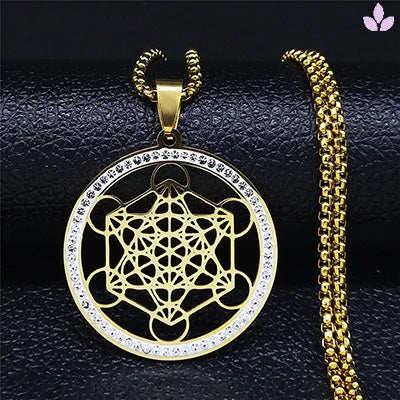
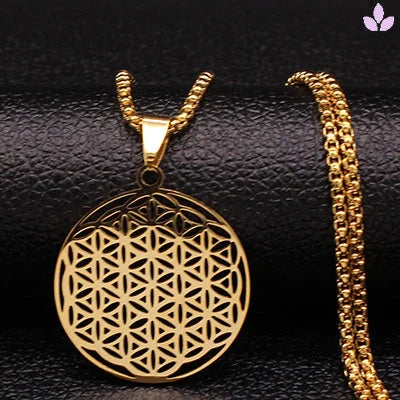
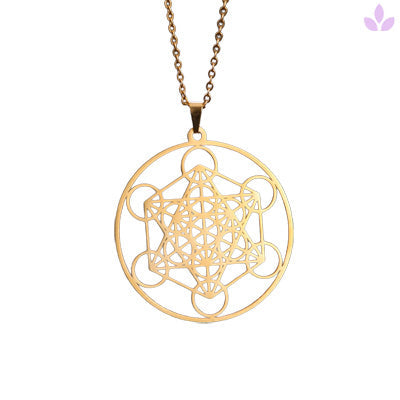
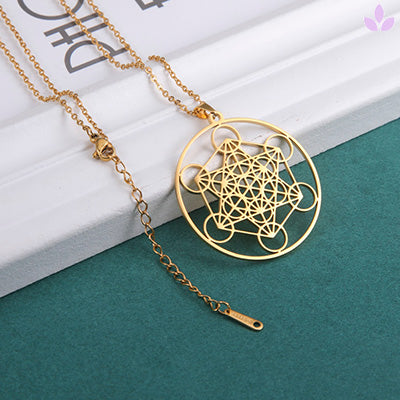
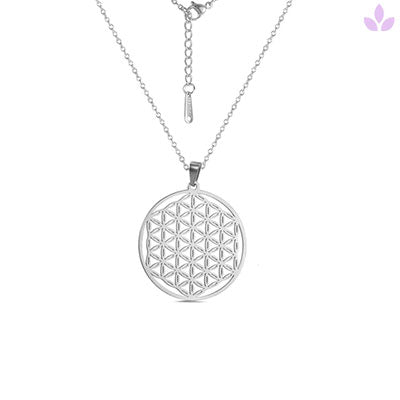
If you like geometric patterns, the Fleur de vie necklace collection offers jewelry to wear for its design or personal meaning. The Divinity necklace presented below combines an openwork pattern in 925 silver with sparkling details.
You can appreciate its symbolism without making it a tool for validating your impressions. No purchase or particular object is necessary to write, reflect, or examine an idea.

When does a reading become too restrictive?
A practice of spiritual reflection should leave you the right to hesitate, ask a question, and change your mind. If an interpretation requires you to obey it immediately, pay to obtain a certainty, or stop listening to any outside opinion, you can choose to step away from it.
It is not necessary to prove that you are “intuitive enough.” An impression that does not confirm itself does not diminish your value. You also have the right to prefer a decision based on explicit information, even if someone encourages you to exclusively follow your feeling.
For a choice with major consequences, do not use this guide as a validation method. Intuition can be part of your reflection, but it does not replace the information and skills necessary for the situation.
FAQ – Frequently Asked Questions About Spiritual Intuition
What is spiritual intuition?
It is an immediate impression that a person gives a spiritual or inner meaning. This interpretation does not demonstrate a supernatural origin or the accuracy of the felt conclusion.
How do I know if my intuition is right?
The feeling alone is not enough. Describe the idea precisely, examine the available information, and accept the elements that contradict it. There is no sensation that automatically certifies a truth.
Can you develop your intuition by writing?
Writing can help you formulate your impressions and reread them. It does not prove that their accuracy increases, nor does it turn a journal into a prediction tool.
Can intuition reveal someone’s feelings?
No. It describes your impression, not the other person’s thoughts. A respectful question and real communication remain necessary to understand what the person wishes to express.
Should you always follow your intuition?
No. You can consider it, ask for clarification, wait, or decide otherwise. A feeling is not a command and does not take away your freedom of judgment.
Listening Without Giving Up Verification
Trusting your feeling can coexist with doubt and verification. An intuitive impression sometimes deserves a place in your reflection; it does not require being held as true. Keeping this nuance allows you to explore your inner life without entrusting it with the power to decide for you.
Similar Articles
To continue your discovery of the personal meaning of images and objects, discover 15 lucky symbols and their meaning.